Exein raises $270M at $1.7 billion valuation to advance physical AI security

By SSN Staff
Updated 12:11 PM CDT, Thu September 17, 2026
ROME—Exein has raised $270 million in new funding at a $1.7 billion valuation to expand its presence in the United States and Asia-Pacific markets, the company says.
The funding round was led by Headline, with participation from Sofina, Goldman Sachs, the European Investment Bank Group through ETCI, KfW Capital and T.Capital, alongside existing investors including Balderton, HV, Lakestar and Geodesic Capital. The company also expanded its revolving credit facility led by J.P. Morgan.
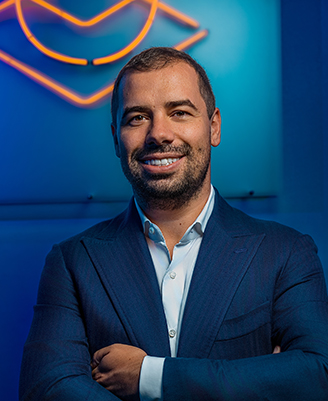 About half of Exein’s revenue is already generated in the U.S. and Asia-Pacific markets. The company recently established an APAC headquarters in Taiwan and said it intends to increase U.S. hiring, partnerships and customers while pursuing strategic acquisitions.
The company specializes in securing connected devices and intelligent machines, including robots, drones and autonomous vehicles. Its technology is currently deployed across more than 2 billion devices worldwide, placing it at the center of what it describes as the transition from cloud-based AI to "Physical AI," where machines can perceive, decide and act in the physical world.
Earlier this year, Exein launched Photon, a runtime security architecture that operates at the kernel level to stop malicious code before execution. The company is now developing a proprietary foundation model trained on telemetry collected from devices running its software, with the goal of creating autonomous security agents capable of responding to threats at machine speed.
"AI is moving out of the cloud and into the physical world, and this is the transition Exein was built for," said Gianni Cuozzo, founder and CEO of Exein. "Frontier models are pushing the patch window to zero. Attacks now happen at machine speed, so defense has to as well."
According to Exein, it is currently seeing approximately 5,000 new non-repetitive cyberattacks per week across its network, roughly five times the level recorded a year ago.
Clarey Zhu, partner at Headline, said the growing adoption of AI-enabled robotics, vehicles and critical infrastructure is creating a major new cybersecurity market.
"As AI moves into robots, vehicles and critical infrastructure, securing the physical world will become one of the defining cybersecurity challenges of the next decade," Zhu said.

Comments