Lauren Van Metre leads WIIS into a new security era As global security challenges evolve, WIIS’s new leader brings a bold vision for empowering women and defending democracy

By Cory Harris, Editor
Updated 8:27 AM CDT, Mon October 13, 2025

WASHINGTON—When Lauren Van Metre recently became president and CEO of Women in International Security (WIIS) in July, she brought decades of experience navigating the evolving global security landscape.
Van Metre’s career began at the Pentagon and the State Department in the 1990s, a time of shifting geopolitical dynamics.
 “I started my career at the Pentagon and at the State Department, working in an era in the '90s where we were dismantling a sort of geopolitical context,” Van Metre recalls. “The security field pivoted rapidly into new types of threats – terrorism, counterterrorism, and these really nasty civil wars.”
Then, at the National Democratic Institute (NDI), the security field pivoted again, with Van Metre focusing on threats to global democracy, including digital authoritarianism and transnational suppression.
“We saw China and Russia actively recruiting political leaders, training them in authoritarian methods – digital authoritarianism – as ways in which they would govern their countries,” she explained. “It wasn’t just about information manipulation. It was about power, and how it was being redefined through technology.”
Under Van Metre, a strategic pivot for WIIS
Van Metre sees WIIS as a platform to continue – and expand – that mission, which includes what she calls an “institutional pivot” to shift WIIS’s focus from peacebuilding to addressing global re-militarization and its impact on democracy.
“I was so pleased to be offered this position at WIIS for two reasons,” she said. “First, because a concerted aspect of authoritarian rise has been to suppress women’s leadership writ large. And second, because the board agreed with my vision for this institutional pivot.”
Catalyzing networks and building pipelines
Founded in 1987, WIIS has long promoted women’s leadership in international security. Today, it advances its mission through professional development, research and global community building.
“We offer leadership training, mentoring and networking opportunities,” Van Metre said. “We also conduct research projects and policy initiatives on critical topics like climate, hybrid warfare and cyber.”
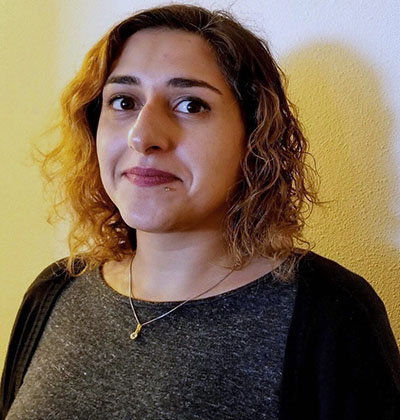 WIIS’s new private sector membership tier offers access to a curated jobs board, publishing opportunities, professional development resources and discounts on courses and literature.
“Our No. 1 asset is our network,” said Layla Hashemi, WIIS’s director of programs and partnerships. “We connect individuals globally to work on the most pressing security issues.”
A global network for whole-of-society solutions
Hashemi also highlighted the organization’s global reach – more than 15,000 members in 60 countries, with new affiliates in Chile, Denmark, Albania, Iceland, Senegal, Nigeria and Rwanda.
“One of our strengths is engaging individuals in their local context,” Hashemi said. “We don’t presume to know what the reality is on the ground in Senegal – but our affiliates do.”
Advancing leadership in a changing world
As WIIS enters a new chapter, it remains committed to advancing women’s leadership in international security – while building inclusive, evidence-based solutions to meet the challenges of a rapidly changing world.
“We’re now examining what this new global security landscape means for democratic systems and how women’s leadership must be central to navigating it,” Van Metre concluded.

Comments