Security industry predictions for 2026: AI, identity verification and video intelligence

By Ken Showers
Updated 12:11 PM CST, Wed December 10, 2025

YARMOUTH, Maine — As 2025 draws to a close, the security industry is looking ahead to what will shape the coming year. Security Systems News (SSN) spoke with several experts about the trends and challenges they expect to dominate in 2026, from agentic artificial intelligence (AI) to evolving identity verification and next-generation video analytics.
Agentic AI will transform workflows
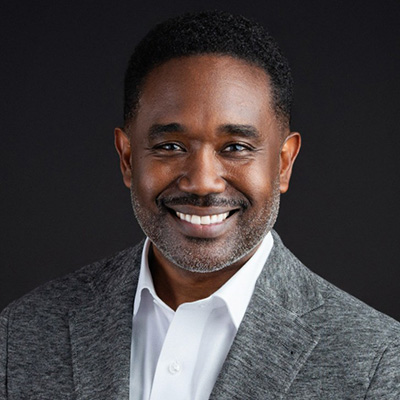 Richard Copeland, CEO of Leaseweb USA, predicts that AI will move beyond optimization to become truly agentic, fundamentally changing how businesses operate.
“AI is no longer just a tool for optimization,” he said. “In 2026, agentic AI starts replacing full workflows, and that shift will separate companies that understand how to use AI from those that fight it. The real impact isn’t that AI replaces jobs, but that it replaces the tasks people shouldn’t be doing in the first place—the repetitive, time-sucking operations that drain teams. Organizations that lean into agentic AI will run faster, make decisions earlier, and redirect people into work that actually moves the business.”
Identity verification faces ‘easily mass’ fraud
Yair Tal, CEO of AU10TIX, warns that fraud is entering a new era, driven by generative AI, where identity verification must evolve from static authentication to continuous risk assessment. He emphasizes that organizations must adopt adaptive identity intelligence that updates as quickly as fraud tactics evolve.
“Fraud has undergone a three-stage evolution: It began as individual attempts, scaled into organized mass attacks, and has now entered the ‘easily mass’ era where generative AI lets even junior fraudsters create synthetic identities and deepfakes at unlimited volume,” he said. “The result is unprecedented scale, speed and accessibility, with new fraud patterns emerging by the hour. In this environment, authentication alone collapses because deepfakes operate in a present-progressive cycle: The pattern you stop today is replaced by a new one tomorrow.”
Video security becomes operational intelligence
Freddy Kuo, chairman at Luminys, believes video monitoring will no longer be passive. Instead, it will become an active layer of operational intelligence.
“In 2026, video security will evolve from passive monitoring to a measurable layer of operational intelligence,” he said. “As environments become more dynamic and customers expect greater reliability in real-world conditions, intelligent systems must interpret context, explain why performance changes, and maintain consistent analytics even in low-light or unpredictable environments. This shift signals a broader industry expectation: Security systems must do more than see; they must understand.”

Comments