O.W.L. sharpens focus on radar’s role as ‘digital fence’

By Cory Harris, Editor
Updated 1:16 PM CDT, Wed July 1, 2026
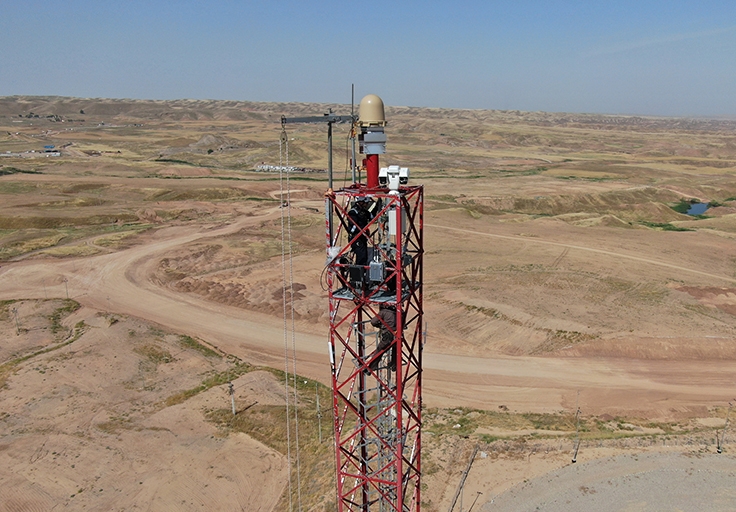
HUNTSVILLE, Ala.—As drone activity and perimeter threats grow more complex, Observation Without Limits (O.W.L.) is positioning radar as a core element of layered security strategies across critical infrastructure, company officials say.
Founded out of defense contractor Dynetics, O.W.L. initially focused on perimeter protection for utility infrastructure but has since expanded into 3D radar systems capable of detecting and tracking aerial threats.
 “The problem is perimeter security - you can do it a lot of ways,” said Adam Robinett, CEO of O.W.L. “Radar scans the environment, detects movement and can tell you whether it’s a person, a vehicle or something else. At long distances, it functions as a digital fence.”
Demand grows as threats evolve
Demand is increasing across utilities, aviation, corrections and government, with customers expanding deployments as threat environments change - particularly with the rise of drones.
“The same customers that initially deployed 2D systems are now coming back and asking about aerial detection,” Robinette said. “Drones have introduced a more complex threat environment.”
Joel Simoneau, chief engineer at O.W.L., said corrections facilities highlight that shift.
“Contraband used to come in over fences,” Simoneau said. “Now it’s drones, including systems operating on pre-programmed routes, which creates new detection challenges.”
O.W.L. is also seeing growing interest from data centers, industrial facilities and sports venues, where concerns include security risks, unauthorized drone-based video capture and general airspace awareness.
Radar as part of a layered approach
 O.W.L.’s systems are often integrated with video management platforms to enable automated camera cueing and layered verification before alerts reach operators, helping reduce unnecessary alarms and improving response times.
“There’s no single sensor that solves the whole problem,” Simoneau said. “It takes multiple systems working together - radar, cameras and other technologies - to provide a complete picture.”
Within that framework, Robinette positioned radar as the first line of detection.
“It’s the early warning system,” he said. “It delivers situational awareness before other technologies are triggered.”
Integration and operator readiness
Successful deployments depend not only on technology, but also on configuration and training.
“Customers often start by saying they want to see everything,” Simoneau said. “But, ultimately, they need actionable information.”
Robinette said setting expectations early is key, particularly in distinguishing between real threats and nuisance alerts and tailoring systems to each environment.
Simoneau added that operator training remains critical.
“You can present clear information, but the operator still has to respond appropriately,” he said.
Looking ahead
O.W.L. expects future development to center on deeper integration and improved data presentation.
“Data fusion is where this is going,” Robinette said. “It’s about bringing multiple inputs together, so operators see what matters.”
Simoneau said the focus will be on improving accuracy while reducing unnecessary alerts as classification and tracking capabilities continue to evolve.
“The goal is better information and better decision-making,” he said.
Related reading:
Photo courtesy of Observation Without Limits (O.W.L.)

Comments