Smart home complexity fuels growth in pro install services Elizabeth Parks of Parks Associates shares data-backed insights on how installers can capitalize on rising consumer demand

By Ken Showers
Updated 3:05 PM CDT, Mon September 8, 2025

DALLAS — As smart home technology becomes more sophisticated and widespread, homeowners are increasingly seeking professional help to install and manage their devices, according to the latest research from Parks Associates.
That trend is expected to continue, according to Elizabeth Parks, president and chief marketing officer. With connected devices growing more complex, Parks sees expanding opportunities for professional installers to play a central role in ensuring seamless integration and long-term user satisfaction.
SSN: According to your findings, nearly 44% of smart home device owners use professional installation at least once, and 29% turn to pros even after attempting DIY. Given that, how do you see the professional’s role evolving as smart home ecosystems grow more complex?
Parks: As the market matures, professional installation and support will remain central to smart home adoption. Professional installation is a cornerstone of market growth, consumer satisfaction and long-term engagement.
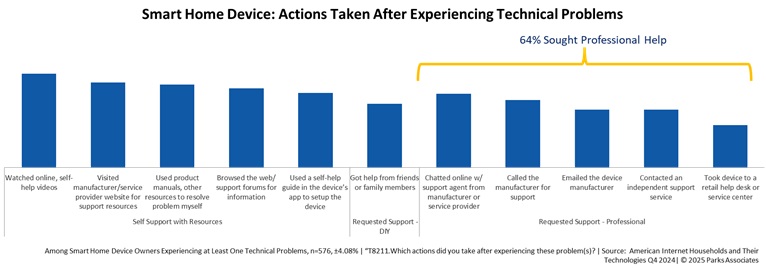
Support is also important. Nearly two-thirds of households facing technical issues with their smart home devices sought professional help.
SSN: Your findings highlight that pro-installed smart cameras earn an NPS of 49 compared to 41 for self-installed units, and younger consumers (18–24) are significantly more likely to struggle with physical installation (42% vs. 19%). What strategies can professional installers adopt to better support these demographics and improve customer satisfaction across the board?
Parks: It’s interesting that younger people struggle with installation than older adults. Professional installation reduces this risk of install and usage problems by ensuring that devices deliver the advertised functionality from the start. Targeting younger consumers who live in a 'do it for me' world is a good strategy, but expectations will be high. Success depends on meeting their high expectations for seamless service, instant support, and effortless convenience.
.jpg)
SSN: Your findings point out that installation challenges and configuration issues rank among the top reasons for product returns. How can manufacturers and professional installers collaborate on, say, smarter packaging, better documentation, or unified installation tools to reduce returns and enhance the overall smart home ecosystem?
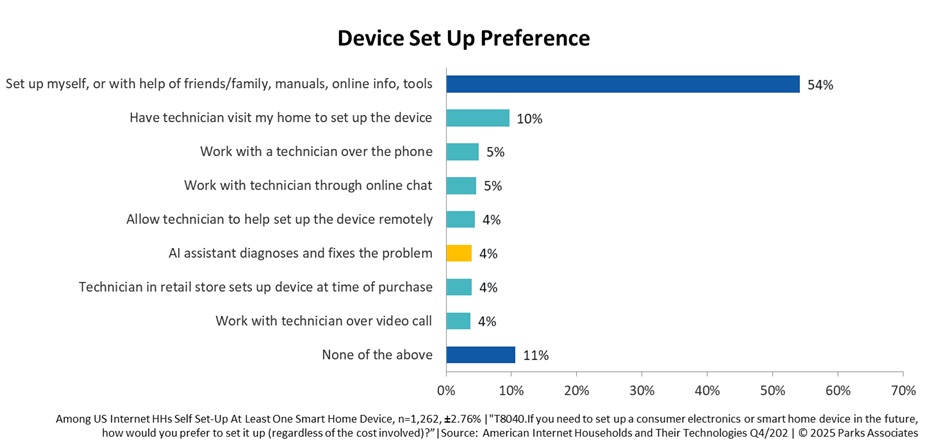
Parks: A majority of consumers (54%) prefer to set up devices themselves, but they rely heavily on online resources, tutorials and digital tools to guide the process. To help this experience go well, brands can provide more intuitive instructions, video support and smart troubleshooting tools to ensure a smooth DIY experience.
Our research shows that half of those who self-installed a smart home device would seek more support in the future. About half of those who self-installed would attempt to self-install with DIY resources in the future. Thirty one percent would seek technician support, whether in-home, in-store or remotely (aggregate of teal-colored bars).

Comments