Crime, not economics, drives security in 2026, says Pro-Vigil CEO ‘That tells me physical security is going to have at least as strong a year as 2025’

By Cory Harris, Editor
Updated 5:20 PM CST, Tue February 10, 2026
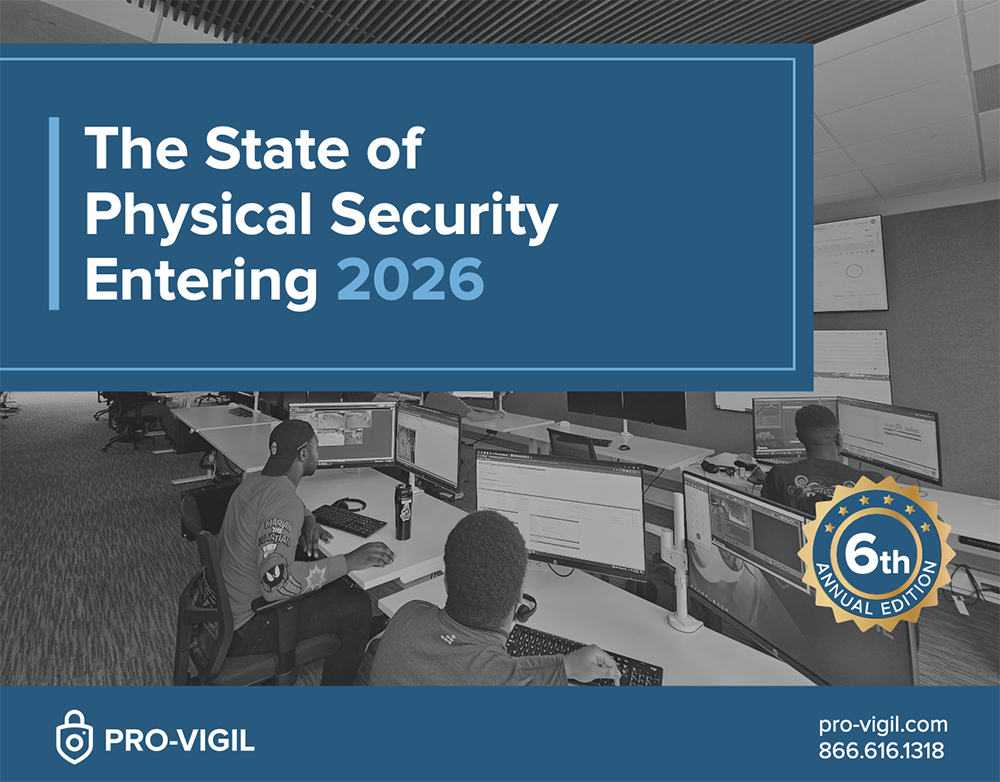
SAN ANTONIO, Texas—Economic uncertainty may dominate boardroom discussions, but Pro-Vigil’s sixth annual Physical Security Report shows that crime - not tariffs, inflation or interest rates - remains the primary driver of physical security decisions.
According to the report, 88% of respondents said physical security incidents either increased or stayed the same in 2025, and the same percentage expects incidents to remain elevated or rise again in 2026. For Pro-Vigil founder and CEO Jeremy White, that statistic defines the outlook.
“If I had to distill the entire report down to one takeaway, that’s it,” he said. “That tells me physical security is going to have at least as strong a year as 2025 - and probably a better one.”
Crime outweighs economic headwinds
.jpg) While concerns around tariffs and interest rates persist, the report found those pressures have done little to slow security demand. Organizations are increasingly viewing security as essential protection against loss and operational disruption rather than a discretionary expense.
While concerns around tariffs and interest rates persist, the report found those pressures have done little to slow security demand. Organizations are increasingly viewing security as essential protection against loss and operational disruption rather than a discretionary expense.
“Crime doesn’t care what tariffs are or what interest rates are,” White said. “There’s been some slowdown, but it hasn’t changed the underlying need for security.”
Technology limits impact, not intent
Despite continued advances in security technology, White cautioned against expecting technology alone to deter criminal behavior. “I don’t think security changes the will of a bad actor,” he said. “Theft is an organized profession.”
What technology does provide, he noted, is speed and mitigation. “Does it stop someone from thinking about stealing wheels off a car? No,” White said. “But it allows us to address the threat faster and prevent it from becoming a loss.”
Time is the hidden cost
Beyond asset loss, the report highlights the operational impact of incidents – particularly delays. Respondents cited damage to assets (27%) as the top impact, followed by inventory losses (21%) and project delays (18%).
“The impact isn’t just replacement cost,” White said. “It’s delayed projects, vehicles sitting unsellable and interest accruing the entire time.”
On construction sites, stolen materials can push timelines back weeks, especially amid just-in-time inventory. “In any industry - construction, manufacturing, retail - downtime is money,” he said.
Where crime is hitting hardest
Rising local crime - cited by 20% of respondents - was identified as the top factor behind increased incidents.
Smash-and-grab retail continues to affect jewelry stores, pawn shops and small retailers, while businesses storing assets outdoors - such as car dealerships, lumber yards and construction sites - remain frequent targets.
“They’ll go to the easiest target,” White said.
Planning, pressure and proving value
Twenty-three percent of respondents changed their physical security strategy in 2025 – a state that White views with a glass-half-full mentality. “I think a 23% adoption of physical security within their organization that prior were doing nothing or something different or something less is actually good news for the industry,” he said.
At the same time, 46% cited economic uncertainty as a threat to security budgets.
“Security isn’t glamorous,” White said. “If we don’t clearly demonstrate the return on investment (ROI), we risk being undervalued.”
A call to security leaders
As security decision-makers plan for 2026 and beyond, White said the key lesson has less to do with technology and more to do with communication.
“As an industry, we need to do a better job showing the value we deliver,” he said. “Budgets are being scrutinized, and competition is healthy - but too often, we don’t clearly demonstrate ROI.”
Security providers, White added, are often judged only when something goes wrong, not when incidents are prevented.
“We need to be better at showing the wins - preventing downtime, avoiding replacement costs and keeping projects on schedule,” he said. “The value is there, but we have to make it visible.”

Comments